GAP (fiction)
The machine, if you could believe it, seemed to exist for the sole purpose of popping corn. I could not tear my eyes from the puffed kernels as they overflowed from a large, metal pan suspended inside a giant glass box. The muted popping sound reminded me of the fireworks shot off on Independence Day back home, how, even out in the countryside, you could hear the celebration late into the night.
I watched the popped kernels spill over the sides of the suspended pan with amazing speed, filling up the glass box like little white clouds, rising higher and higher. I turned to see if Estephanie, too, was amazed. But she wasn’t even looking at the corn-popping machine. She was looking, instead, at me. And she was grinning.
“What?” I asked her, in Spanish.
“Nothing,” she replied. “Your mouth was hanging wide open, that’s all.”
“This is all new to me,” I said, annoyed, “you know that.”
“I know,” she said, grabbing my hand and pulling me toward the nearest escalator. Escalators were not as new to me as corn-popping machines, but still, I held onto the railing distrustfully.
On the second floor, Estaphanie pulled me with purpose past storefront windows filled with jewelry and by small kiosks lined with the latest models of cell phones. I tried not to ogle, to keep the cool and calm demeanor of someone for whom such sights were everyday fair.
“Where are we going?” I asked.
“Just wait,” she said.
After some minutes of tromping through material wonders, Estephanie came to an abrupt halt, and, still having a hold of her hand, so did I.
She looked at me with a nervous expectancy, and as I glanced around to ascertain just what might be the cause for such a look, my eyes landed on a sign above the store before us—three simple letters set against a navy blue square: GAP.
“No,” I said, recoiling instinctively, turning my shoulders—almost violently—away.
“Wait,” Estephanie said, trying, unsuccessfully, to maintain her hold of my hand. I moved, driven by an involuntary and subconscious force, a dozen paces down the atrium’s corridor, landing me in front of, of all things, a gourmet pretzel establishment. A giant, glowing plastic pretzel spun on an electric stand in the window.
“Maricella, it’s just a store,” Estephanie said.
“Why would you bring me there?!” I demanded. “Of all places, why would you bring me there?”
“Maricella,” she said again, trying to emulate, I imagined, the patient and caring tone her parents used with her in times of acute distress, “I thought maybe it could help you.”
I took this moment to begin picking at the one hair on my right arm that always seemed to grow longer than the others. I resented, on the face of it, the audacity of a teenage kid attempting to offer a therapeutic experience to another teenage kid (who, in this case, was me). But I had to admit, I had not fully considered how visiting one of these god-forsaken stores might feel, what it might do for me.
“I mean isn’t that why you came here?” Estaphine asked, with the same patient, parental tone, “To process? To heal?”
“I came,” I said, ending my attention to my right arm’s peculiarly long hair with one final and forceful pluck, “because your father bought me a plane ticket. Nothing more, nothing less.”
But even as I said this, I was crossing the threshold into the GAP, my chest held out, my heart thumping hard inside of it.
It took a moment for my eyes to adjust to the lighting, somewhat dimmer than that of the mall’s atrium. The store was huge, filled with racks of clothes in all directions, mannequins displaying the clothing fashionably, and larger-than-life photos of models on the walls.
“Look,” Estapanie said.
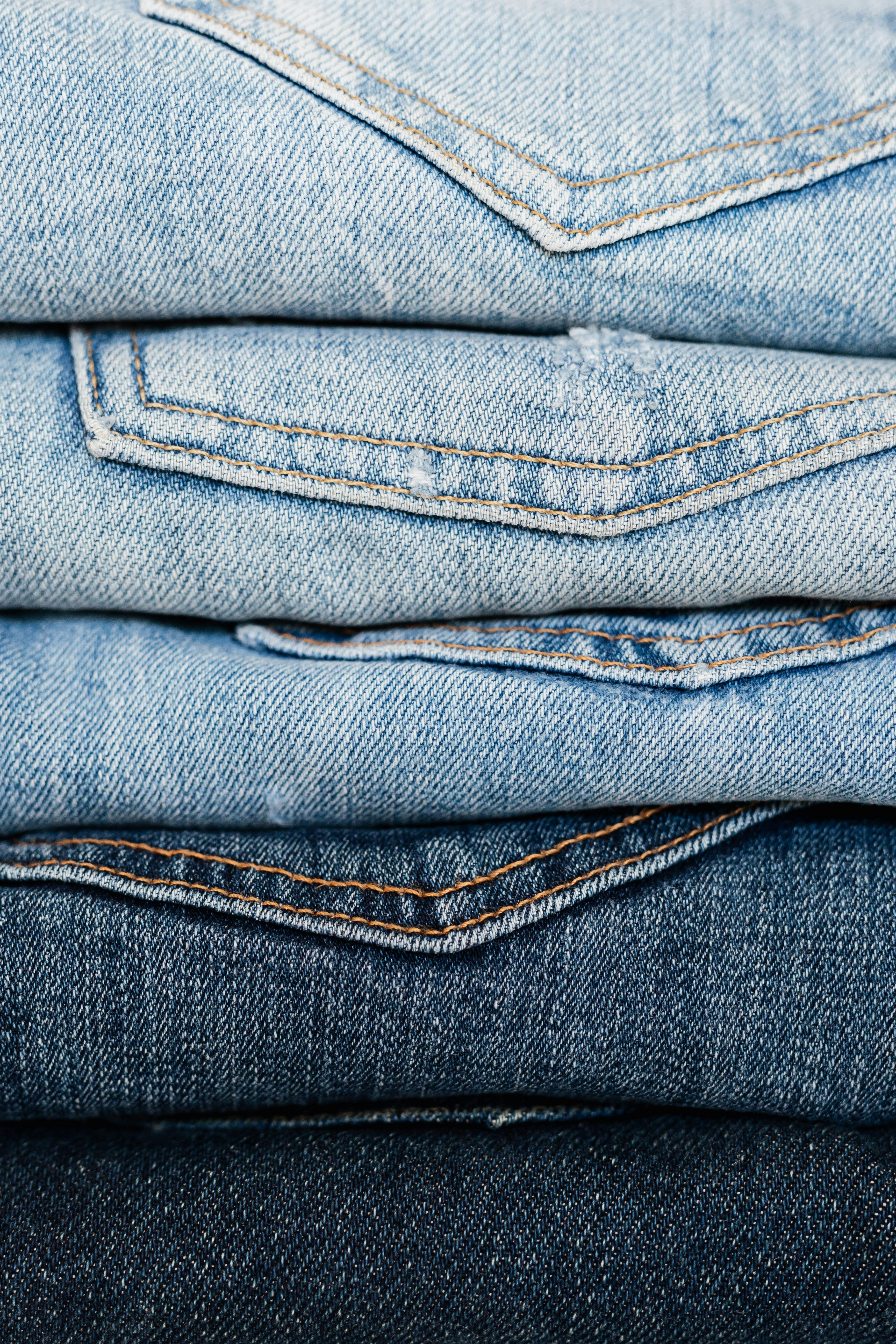
She pointed to a rack of women’s jeans that ran out, seemingly endlessly, before us. I gasped. I ran to it. I pulled the pairs of jeans, one by one, down the rack. I paused at one at random and held the material in both hands, running my fingers over, through, between it. I lifted the pair to my nose, and it smelled like her, when she came home from the factory—the smell of indigo and that terrible, toxic fabric softener.
“Estephanie,” I said, “They could be hers!”
Estephanie beamed.
My hands, running along the waistband, bumped into the cardboard tag. I lifted it to my face, half expecting to see her name on it, a signature attributing the craftsmanship to its rightful source. But instead I saw the price.
“Fifty dollars?” I muttered to myself incredulously. The mutter went inside me, to my stomach chambers, to the acids of digestion. But my body had no interest in digesting this bit of compromising information. It was rejected, regurgitated, sent back to the place from whence it came with force, the mutter reemerging as its constitutional opposite—that is to say, as a primordial shriek of rage. “Fifty dollars?!” I screamed at a high, shrill decibel.
Alerted by my shout, a store attendant turned around. “You’re charging fifty dollars for these jeans?” I demanded of her. “You pay my mother pennies to churn these things out like machines. And you turn around and charge Americans fifty dollars? Does that sound fair to you?!”
The attendant looked at me blankly.
My yelling, I noticed, had gained the attention of other shoppers in the store. They stared at me with the kind of wide-eyedness reserved for unexpected public spectacles. With a response from the attendant seeming unlikely, I turned to a stout, middle-aged woman who was frozen in the act of pursuing winter skull caps, her eyes wide as saucers. “How about you?” I shouted, thrusting my forefinger in her direction. “Does that sound fair to you?!”
“This is Nebraska,” Estaphanie whispered to me nervously, reaching for my hand. “No one speaks Spanish here.”
The attendant lifted a radio to her lips and was saying something with urgency.
“Let’s go,” Estaphine said, at last catching hold of my hand and tugging me towards the exit.
Riding down the escalator, I asked, “Is that what you were imagining when you decided to take me there?”
“Not exactly,” Estephanie said, almost chuckling, but not quite.
I removed my hand from the escalator railing, still too excited from the whole affair to feel much fear of the metal monstrosity that moved us, slowly, downward. I began to again pick at my extra long arm hair.
“Is your father a good lawyer?” I asked.
She shrugged. “That’s what they say.”
“But do you think he’ll win? I mean, do you think he can win the case?”
She looked up to the atrium’s skylights, where the thin winter sun shone through. “He always tells me how powerful the corporations are. But he also says that, sometimes, everybody gets lucky.”
The corn-popping machine on the ground floor was coming into view. It had filled to the brim while we were upstairs, the popped kernels so great in number that they pressed against their enclosure, almost as if they wanted to shatter the glass, to break free.
“Since my mother isn’t going to get her hand back,” I said, “she better get money from those bastards. A lot of money.”


